
Sourdough Pizza Hits Different: The Science (and Flavor) Behind the Crust
Open up any recipe online and you’ll be met with paragraph after paragraph of text detailing the author’s foodie coming-of-age journey. A scrolling, scrolling, scrolling account of a truly great taste experience, like the first time they ever tried a garden-fresh tomato, sourdough bread straight from the oven, or an unconventional brand of cheese the local cheesemonger recommended.
Well, we’re not going to put you through any of that.
Instead, we’re getting straight to it:
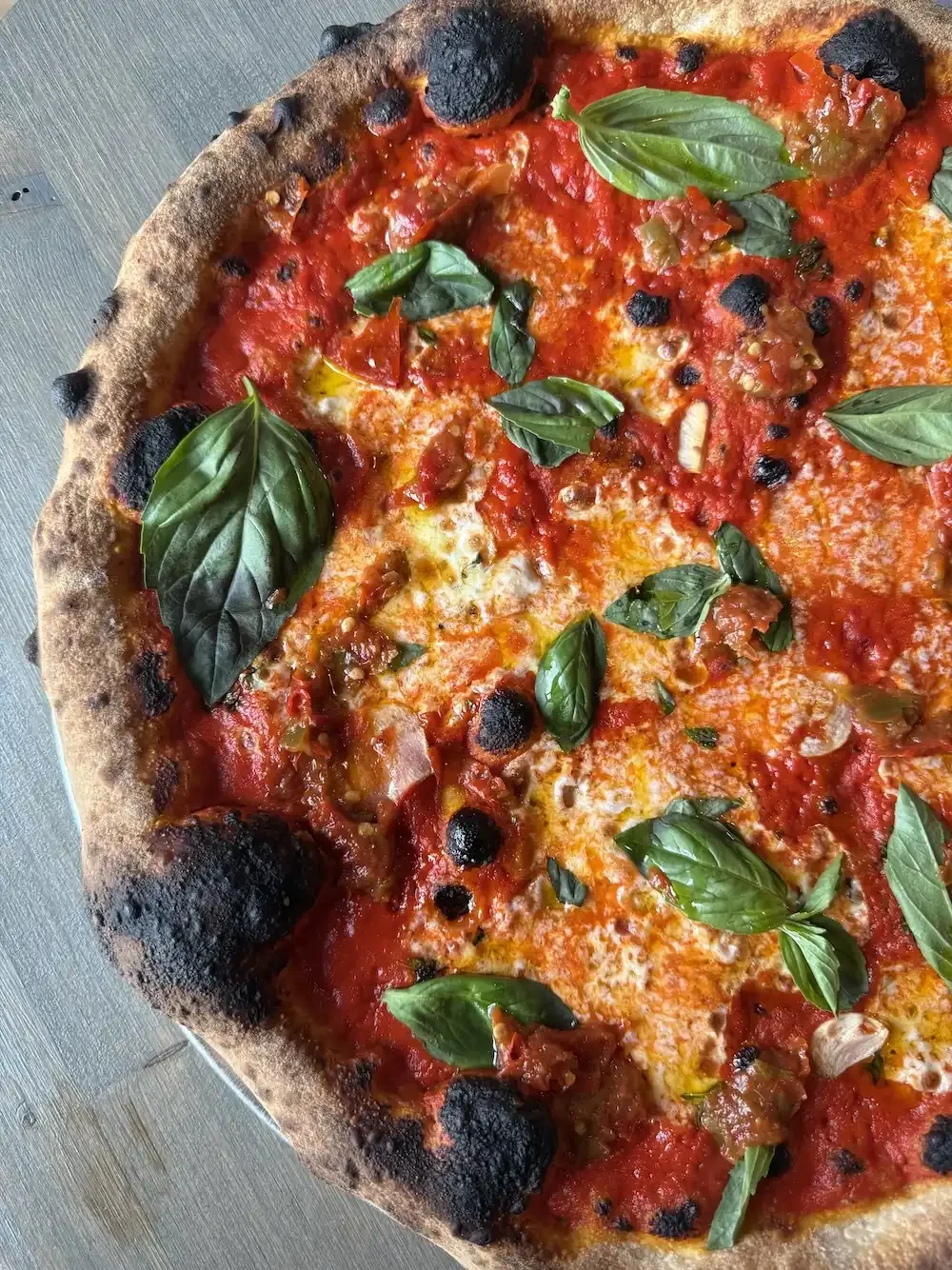
Unless you’ve eaten pizza with sourdough crust made with fresh flour from North Carolina’s most revered mills, you’ve probably never experienced a truly great East Nashville pizza. And we’re here to introduce you to that, because what we’ve just described is the starting spot of all our pizzas.
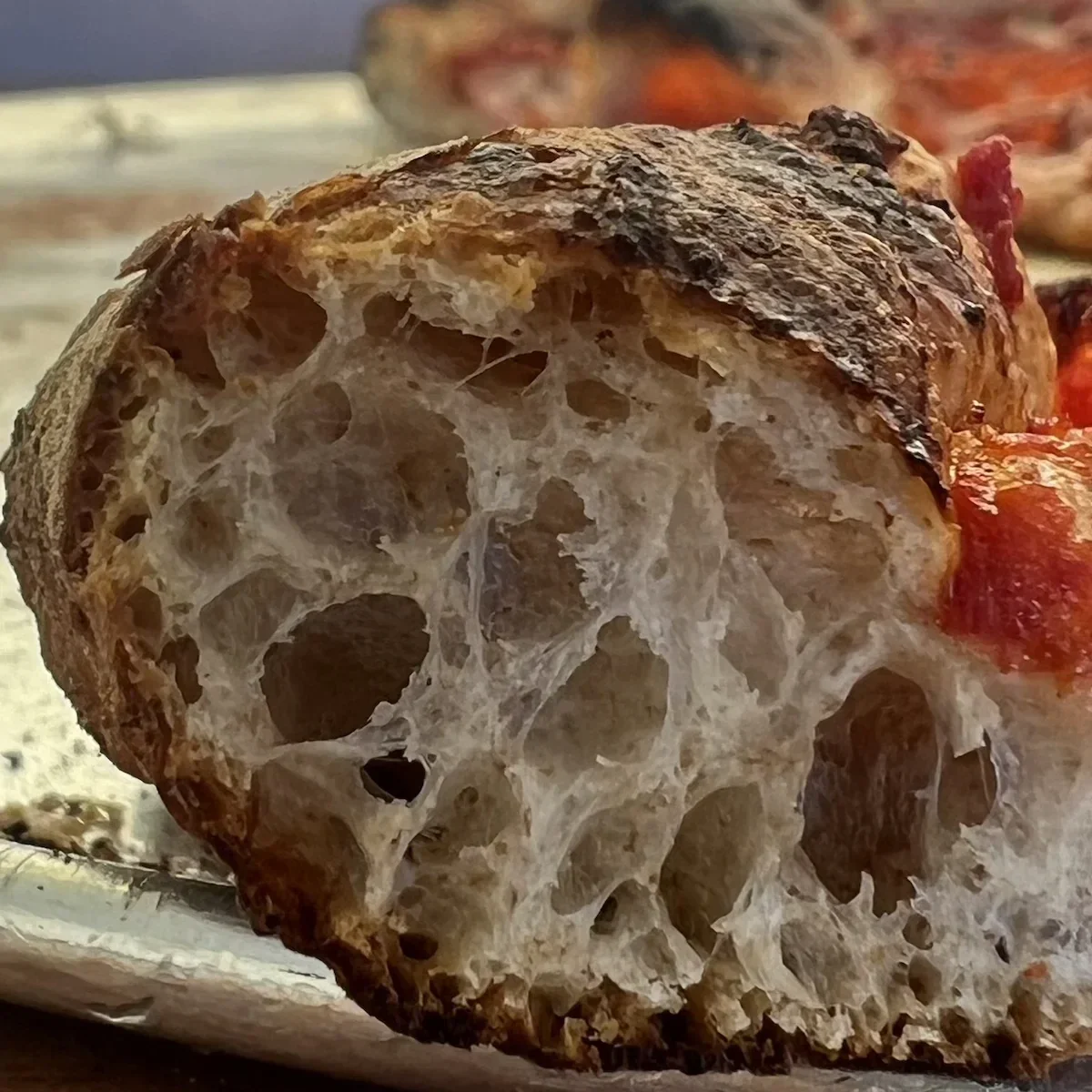
By this, we mean our sourdough starter made with stoneground flour from Carolina Ground Flour and Lindley Mills, which we blend with water, salt, and olive oil to yield a crispy, airy pizza crust with a pleasant chew, an unmistakable aroma, and a complex, tangy, salty flavor.
The Science Behind Sourdough Pizza
With the explosion of interest in sourdough flooding social media, you’d think the influencers invented the stuff. In reality, the very first sourdough loaf dates back to 3,700 BC! About 2,000 years later in Egypt, someone left dough made with flour and water outside and then discovered it had been leavened and fermented by wild yeast and surrounding bacteria. This was the start of the starter, and it’s a method that stuck around for millennia, with the Greeks and the Romans adopting and refining it.
The starter-making process is a strange one. It begins with flour and water in a Cambro that develops into a paste over time. The mixture is then fed by removing some of the dough (if you can call it that at this stage) and adding more fresh flour and water. After several days, microbes move in and begin eating the sugars in the flour. When the mixture becomes bubbly and starts to rise and fall, it’s alive and fermenting.
About those microbes—they’re everywhere. In the flour, in the air, on your hands, in the jar (but mostly the flour, which is full of dormant microbes just waiting to be woken up).
Key Players in a Sourdough Starter
Yeast and lactic acid bacteria (LAB) are the little giants that lift and flavor a sourdough starter. Yeast eats the sugar to produce the carbon dioxide that makes the dough rise and the alcohol bake off (adding a subtle flavor). LAB also eats the sugars to produce creamy and sour lactic acid, and acetic acid that has a more vinegar-like taste.
Sourdough works because wild yeast and bacteria team up to ferment the flour. This creates lift; it also yields acids that create flavor, and enzymes that transform the dough into something uniquely delicious.
Beautiful Ingredients Make Beautiful Pizza
Each sourdough starter has a unique blend of yeast and bacteria, which is why the flavors of the bread or pizza vary. At Smith & Lentz, we’ve manipulated the sourdough starter with stoneground flour from a miller we know to create a beautifully light pizza crust with a superior flavor and texture.
You know it when you taste it.
This is how sourdough crust is done at Smith & Lentz. We’d love for you to try it for yourself. Come on in for fresh food and drinks today, or order our stuff to go!
